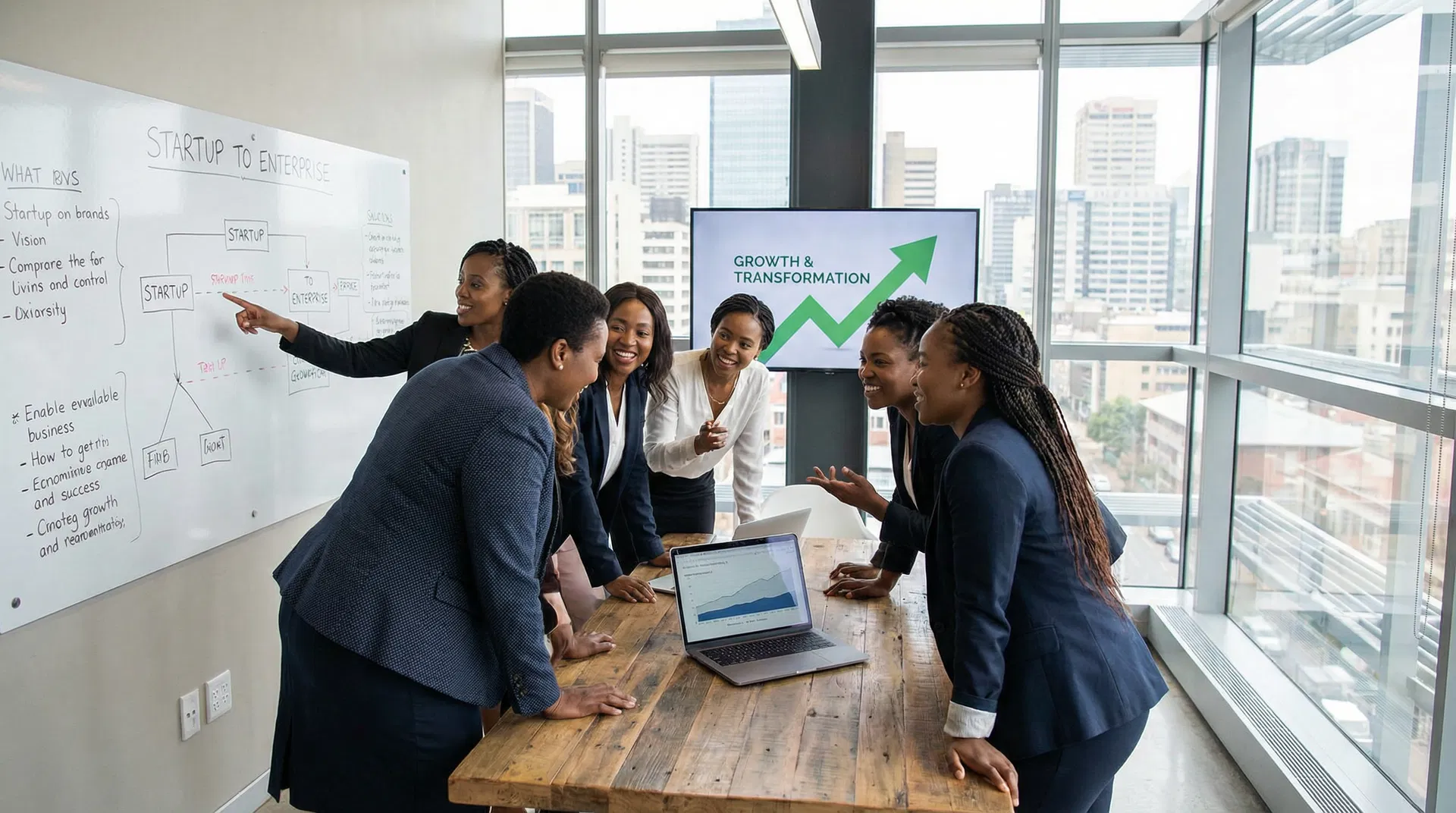
The entrepreneurial spirit of African women is reshaping the continent's economic landscape. From tech startups in Lagos to fashion empires in Johannesburg, women are building businesses that not only generate wealth but also create jobs and drive innovation.
**Three Success Stories**
**Amara Nwosu - Fintech Pioneer (Nigeria)**
Amara started her mobile payment platform from her Lagos apartment in 2020. Today, her company processes over $50 million in transactions monthly and employs 150 people across three African countries. Her secret? "I focused on solving a real problem - making it easier for small businesses to accept digital payments. The market was there; I just had to build the right solution."
**Thandiwe Moyo - E-Commerce Queen (South Africa)**
What began as selling handmade jewelry on Instagram has grown into a multi-million rand e-commerce platform featuring 500+ African artisans. Thandiwe's platform now ships to 40 countries and has created sustainable income for hundreds of craftspeople. "Scaling wasn't about working harder," she explains. "It was about building systems and empowering others to grow with me."
**Fatima Hassan - Manufacturing Maven (Kenya)**
Fatima's organic skincare line started in her kitchen and now exports to Europe, Asia, and North America. Her factory employs 80 women and sources ingredients from 200+ small-scale farmers. "The key to scaling was maintaining quality while increasing production. We invested in training and equipment before we expanded our market reach."
**Common Challenges**
These entrepreneurs faced similar obstacles:
- **Access to Capital**: Traditional banks were hesitant to fund women-led startups
- **Market Access**: Breaking into new markets required strategic partnerships
- **Talent Acquisition**: Finding and retaining skilled employees
- **Work-Life Balance**: Managing business growth while maintaining personal wellbeing
**Solutions That Worked**
**1. Alternative Financing**
All three entrepreneurs leveraged angel investors, venture capital, and crowdfunding rather than traditional bank loans. They also reinvested profits strategically.
**2. Strategic Partnerships**
Collaborating with established companies provided market access and credibility. Amara partnered with banks, Thandiwe with logistics companies, and Fatima with international distributors.
**3. Mentorship Networks**
Each entrepreneur credits mentors with helping them navigate challenges. They now mentor other women entrepreneurs, creating a virtuous cycle of support.
**4. Technology Adoption**
Embracing technology for operations, marketing, and customer service enabled efficient scaling without proportional cost increases.
**The FLAIR Summit Advantage**
This July, the FLAIR Summit's Entrepreneurship Track will bring together successful women entrepreneurs, investors, and business leaders. Attendees will:
- Connect with potential investors and partners
- Learn scaling strategies from those who've done it
- Access mentorship from established business leaders
- Discover funding opportunities specifically for women-led businesses
**Resources for Women Entrepreneurs**
- **African Women Entrepreneurship Program (AWEP)**: Training and networking
- **She Leads Africa**: Community and resources for women entrepreneurs
- **Tony Elumelu Foundation**: Funding and mentorship for African startups
- **Women in Africa Initiative**: Connecting women entrepreneurs across borders
**Your Turn**
Whether you're just starting out or ready to scale, the FLAIR Summit offers the connections, knowledge, and inspiration you need. Join 300+ women leaders who are building the future of African business.
Early bird registration closes soon. Secure your spot and take your business to the next level.
From Side Hustle to Empire: African Women Entrepreneurs Scaling Up
28 December 2025
African women entrepreneurswomen business owners Africascaling startupsfemale CEOs Africaentrepreneurship
Meet three African women who transformed their startups into million-dollar enterprises, and discover the strategies that took them from side hustle to empire.